
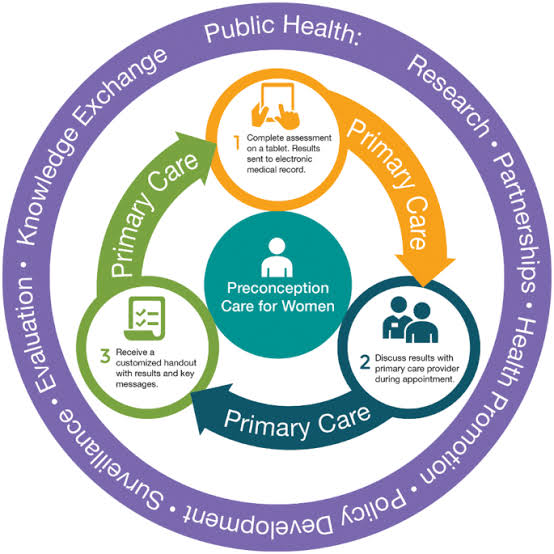
1. Introduction to Preconception Care
- Definition and importance
- Benefits for maternal and fetal health
2. Health Assessments
- Medical History Review
- Chronic conditions (e.g., diabetes, hypertension)
- Family history of genetic disorders
- Physical Examination
- General health assessment
- Laboratory Tests
- Blood tests (e.g., blood type, infectious diseases)
- Genetic screening options
3. Lifestyle Modifications
- Nutrition
- Importance of a balanced diet
- Key nutrients (e.g., folic acid, iron)
- Exercise
- Recommended physical activity
- Weight Management
- Importance of a healthy weight range
4. Mental Health Considerations
- Stress management techniques
- Importance of mental well-being
5. Avoiding Harmful Substances
- Substance Use
- Tobacco, alcohol, and recreational drugs
- Medications
- Review of current medications and supplements
- Environmental Exposures
- Reducing exposure to harmful chemicals
6. Reproductive Health
- Understanding the menstrual cycle
- Timing for conception
- Fertility awareness methods
7. Genetic Counseling
- When to consider genetic counseling
- Understanding hereditary conditions
8. Vaccinations
- Importance of vaccinations (e.g., rubella, flu)
- Updating immunization records
9. Support Resources
- Educational resources (books, websites)
- Support groups and community resources
- Healthcare provider contacts
10. Conclusion and Follow-Up
- Summary of key points
- Importance of ongoing healthcare and monitoring
Additional Materials
- Handouts: Provide informational brochures summarizing each section.
- Workshops: Organize sessions for discussions and Q&A.
- Online Resources: Create a dedicated website or portal for easy access to information.
Evaluation
- Assess understanding through quizzes or feedback forms to ensure comprehension and retention of the material.


Register Now!